Business intelligence
Basira
Find where money is leaking. See the rows behind the finding. Check whether the action helped.
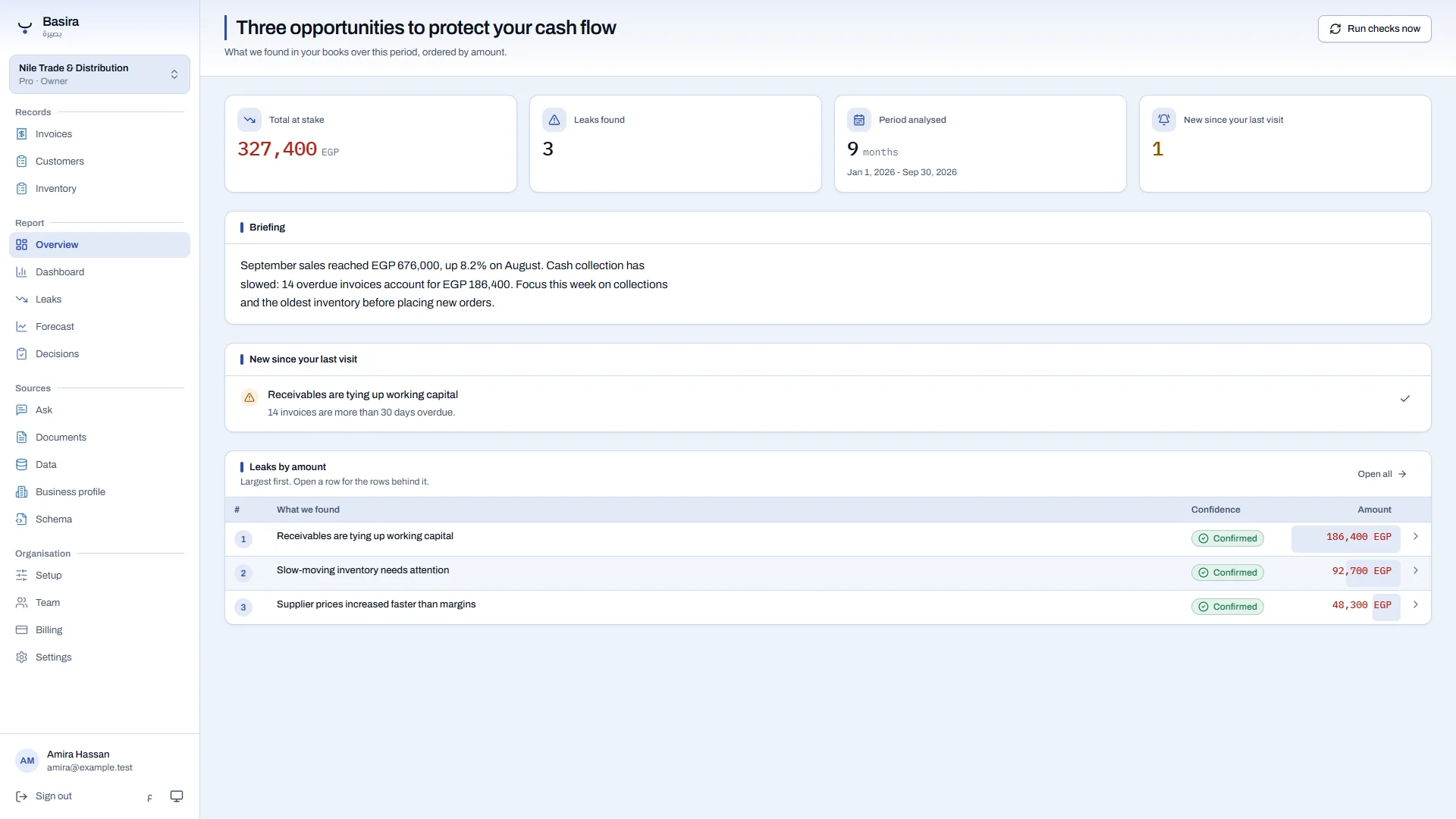
Screenshots from the project interface. Populated product views use synthetic demo data; displayed figures are not measured customer outcomes.
What this enables.
Turns financial anomalies into prioritized actions a business owner can inspect, question and revisit.
The problem.
A business owner needs to know which problem deserves attention and how much is at stake. A persuasive summary is insufficient without the transactions, assumptions and follow-up that make it inspectable.
Inside the system.
Follow the request, one step at a time.
Ingestion pipeline
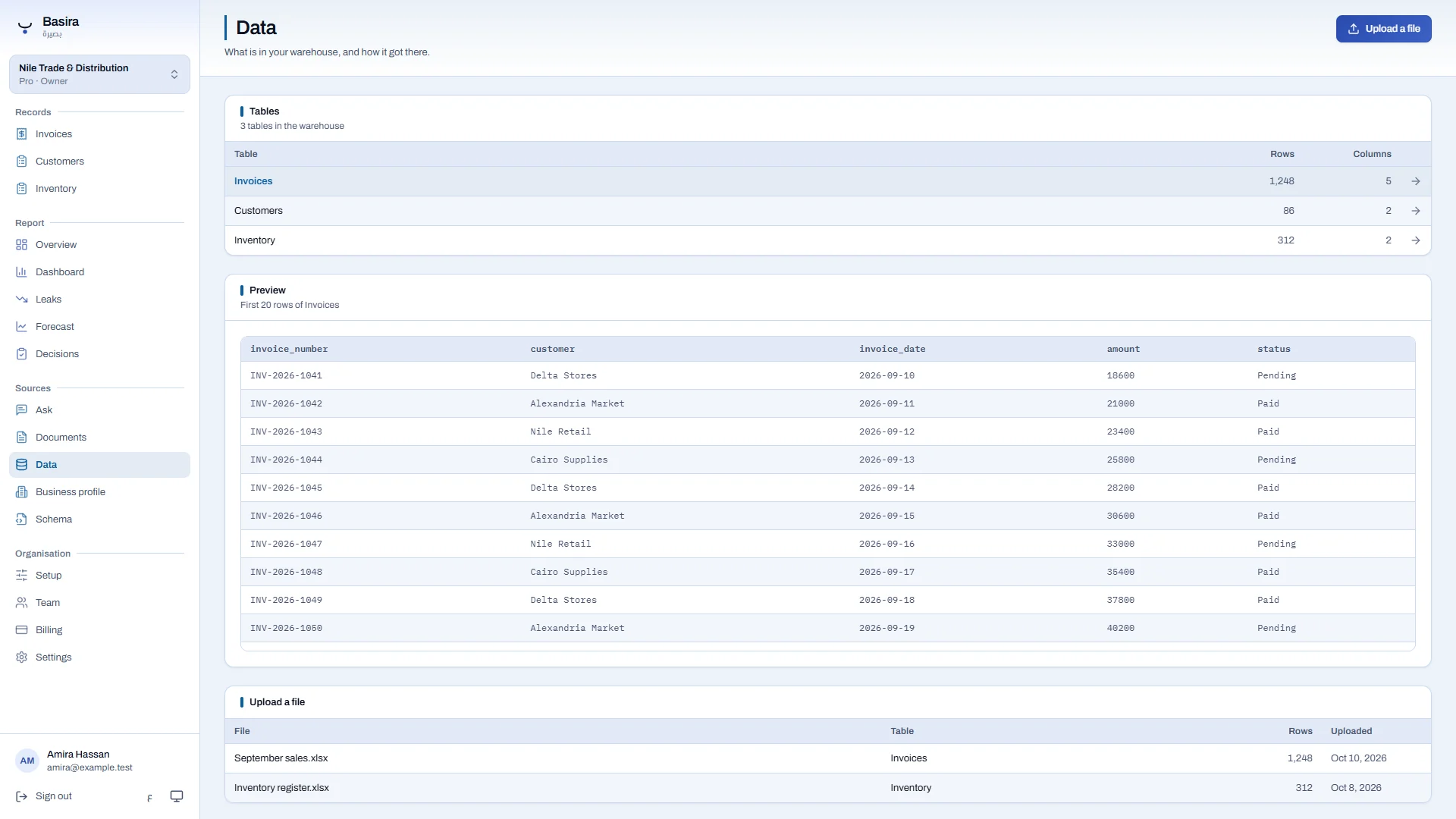
spreadsheet → normalized tablesProfile, map and clean uploaded business tables against the company's resolved schema.
An illustrated request flow, based on the project architecture. Select any step to inspect it.
The decisions.
Calculate first, explain second
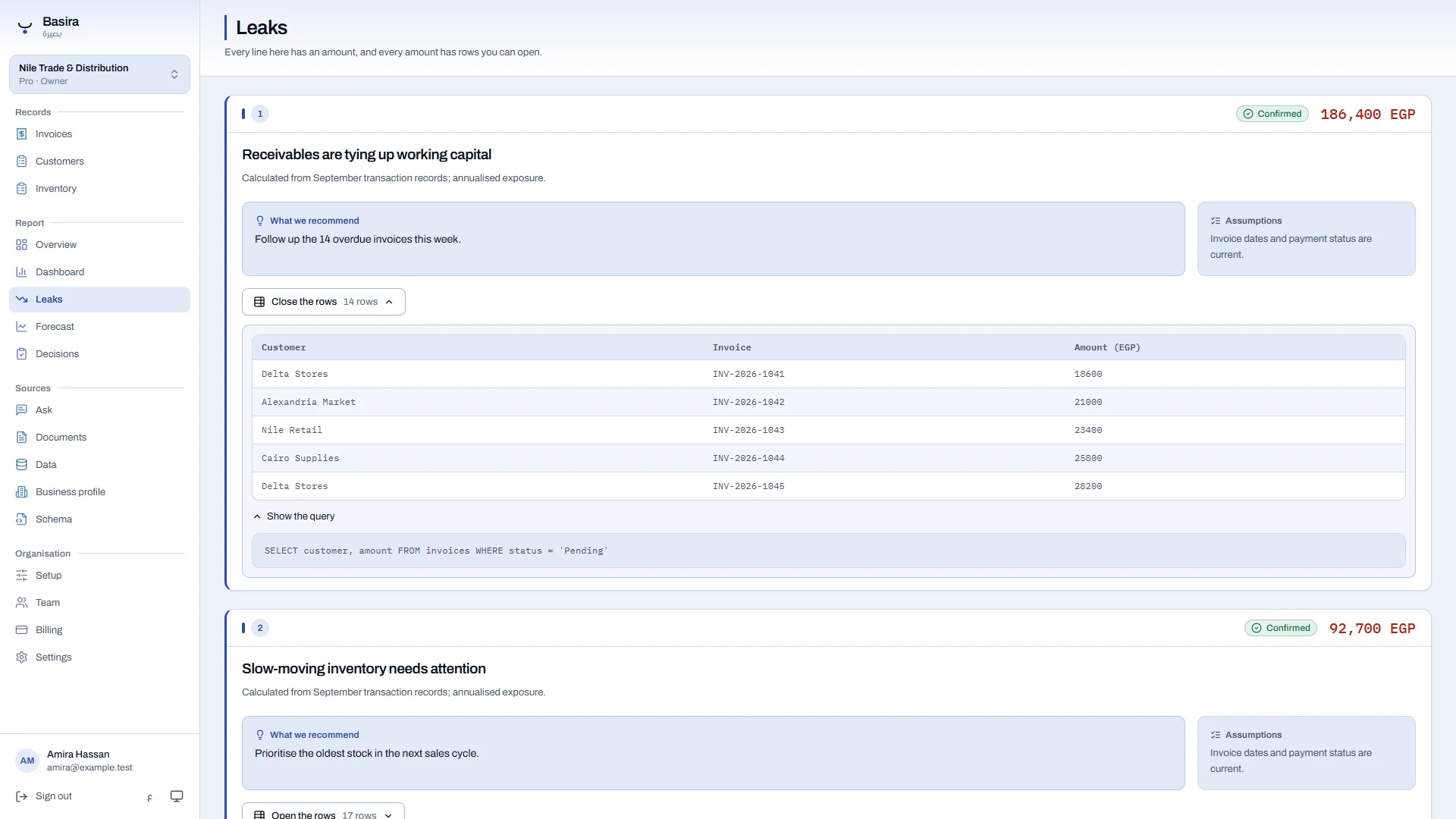
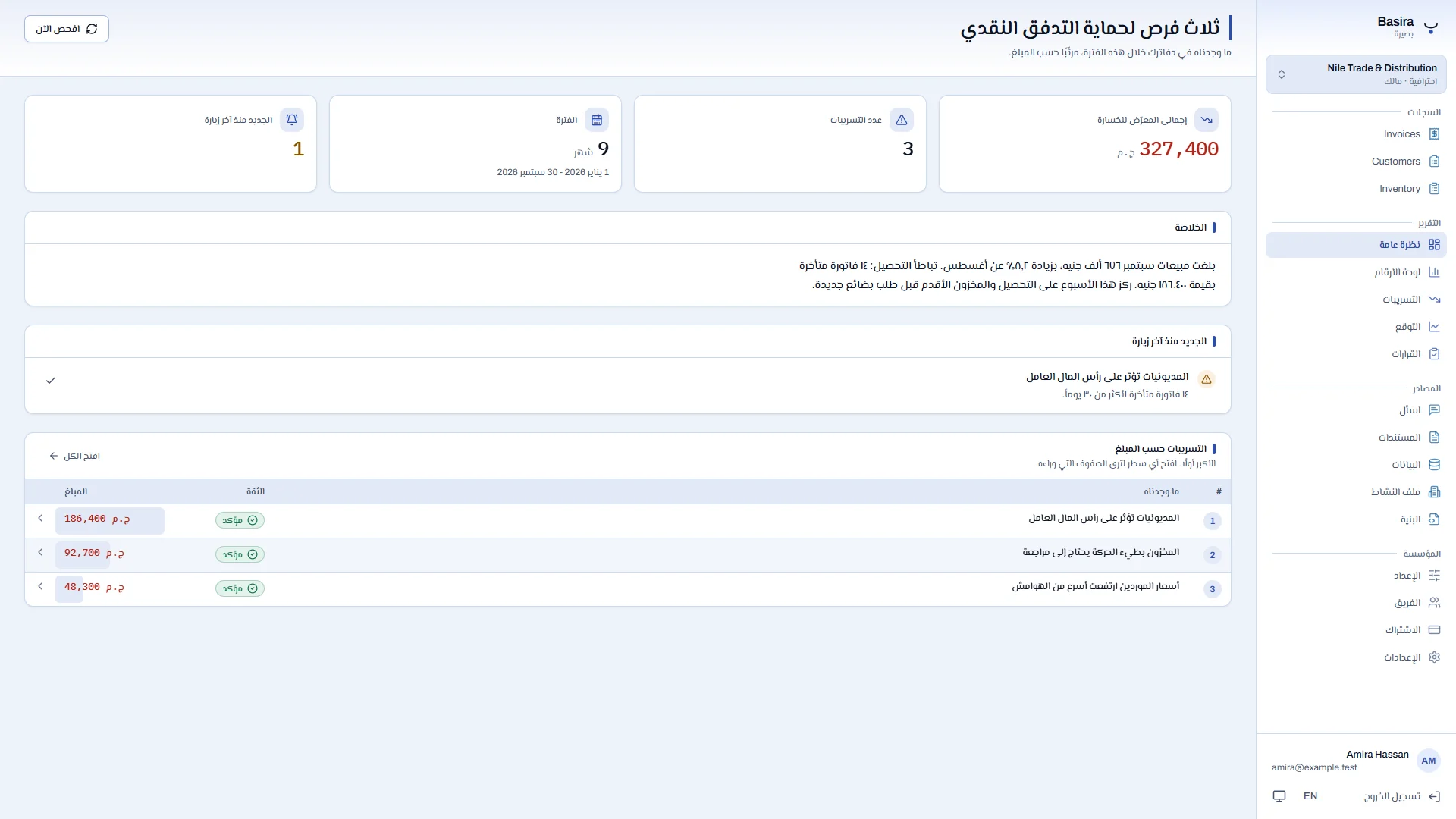
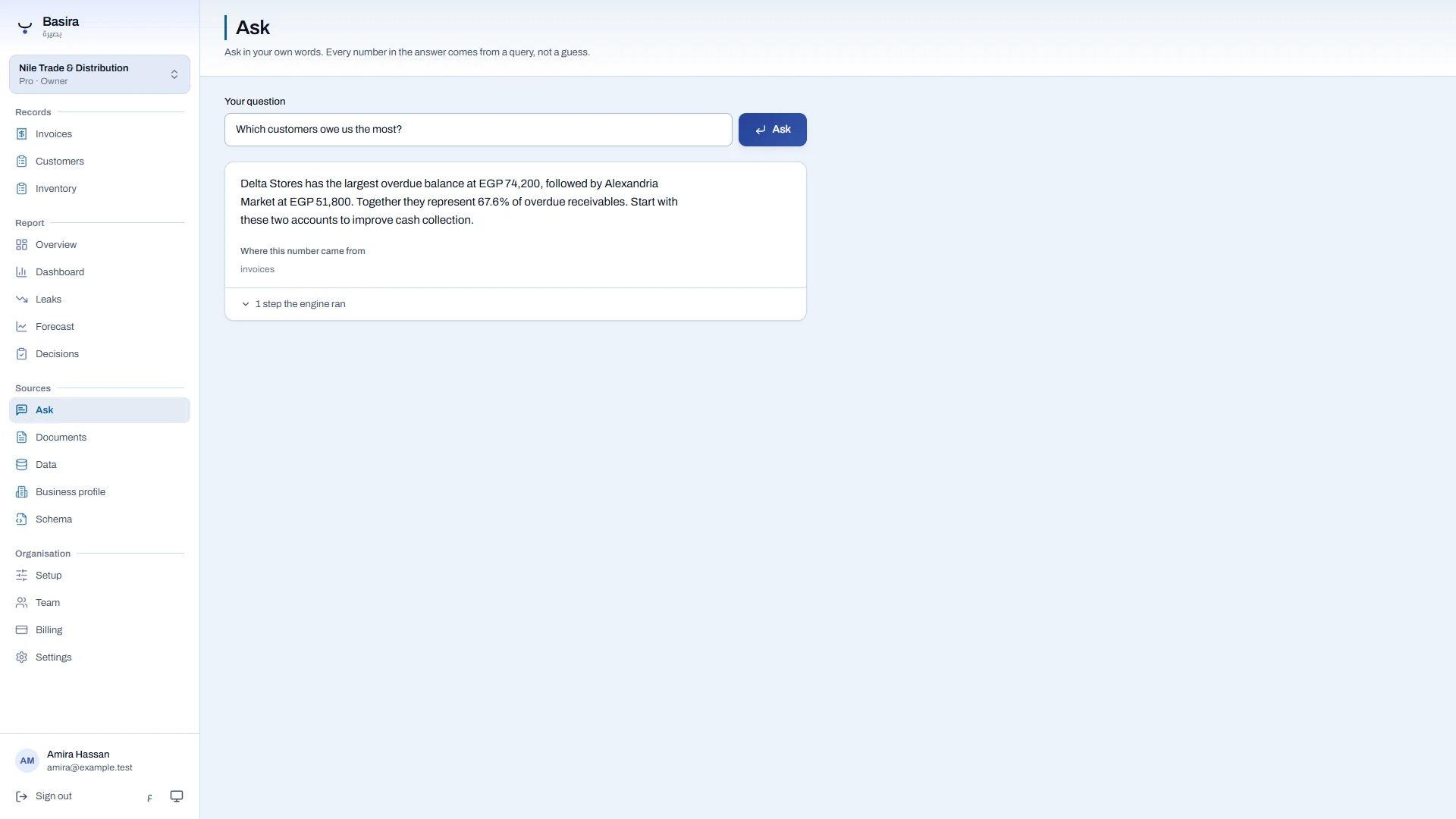
Findings carry an EGP impact, source rows and the query behind them. The interface lets the owner expand the evidence instead of accepting the summary on trust.
The trade-offA priced opportunity depends on its assumptions and source quality. Estimated impact is not money recovered, and synthetic detector checks are not customer outcomes.
Let each company compose its schema
Versioned schema modules resolve to a company's composition. Analysis revisions keep the resolved snapshot so an older finding retains its meaning.
The trade-offFlexible industry support requires explicit schema versions and migration paths, rather than one fixed data model.
Make advice accountable
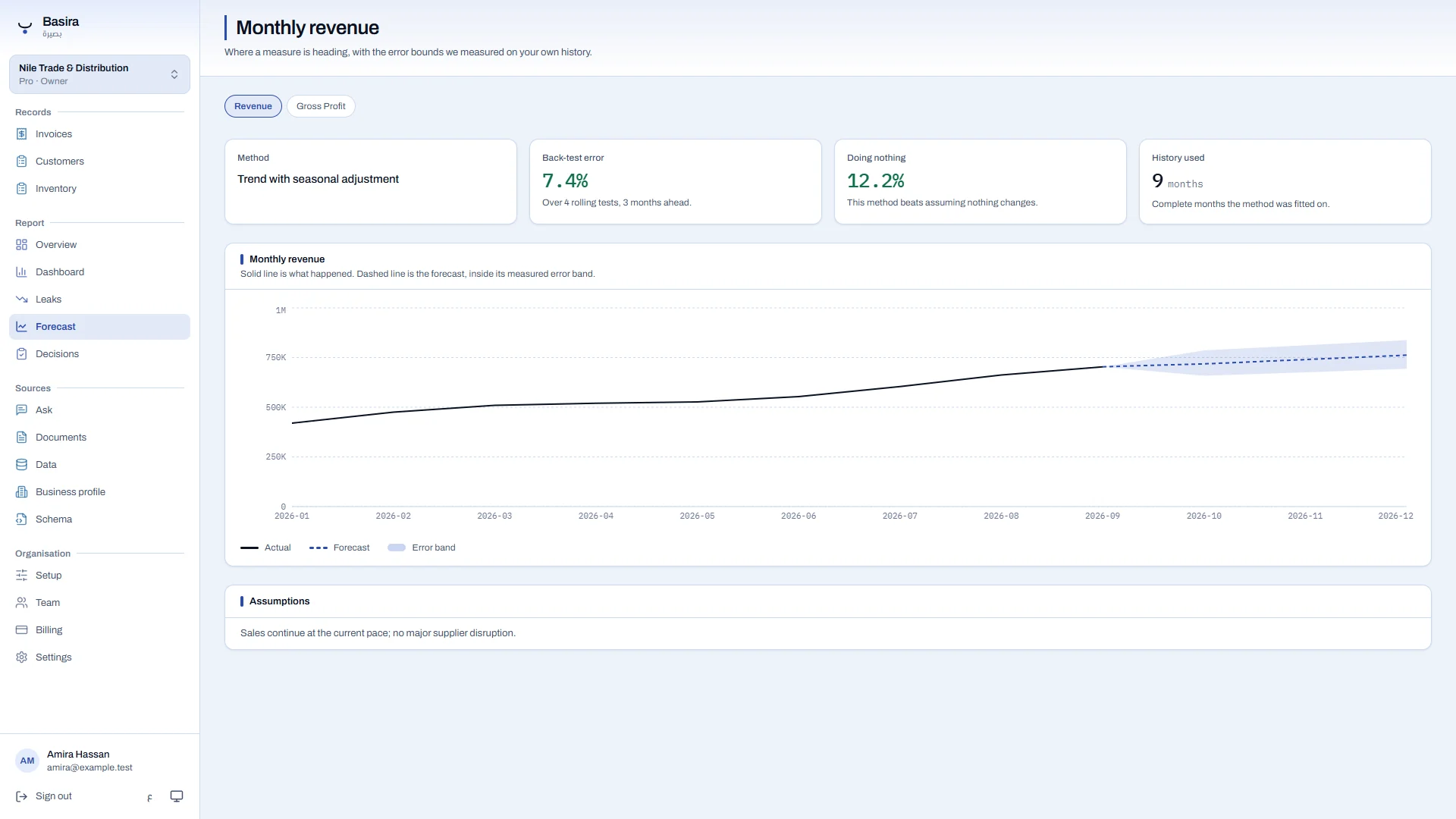
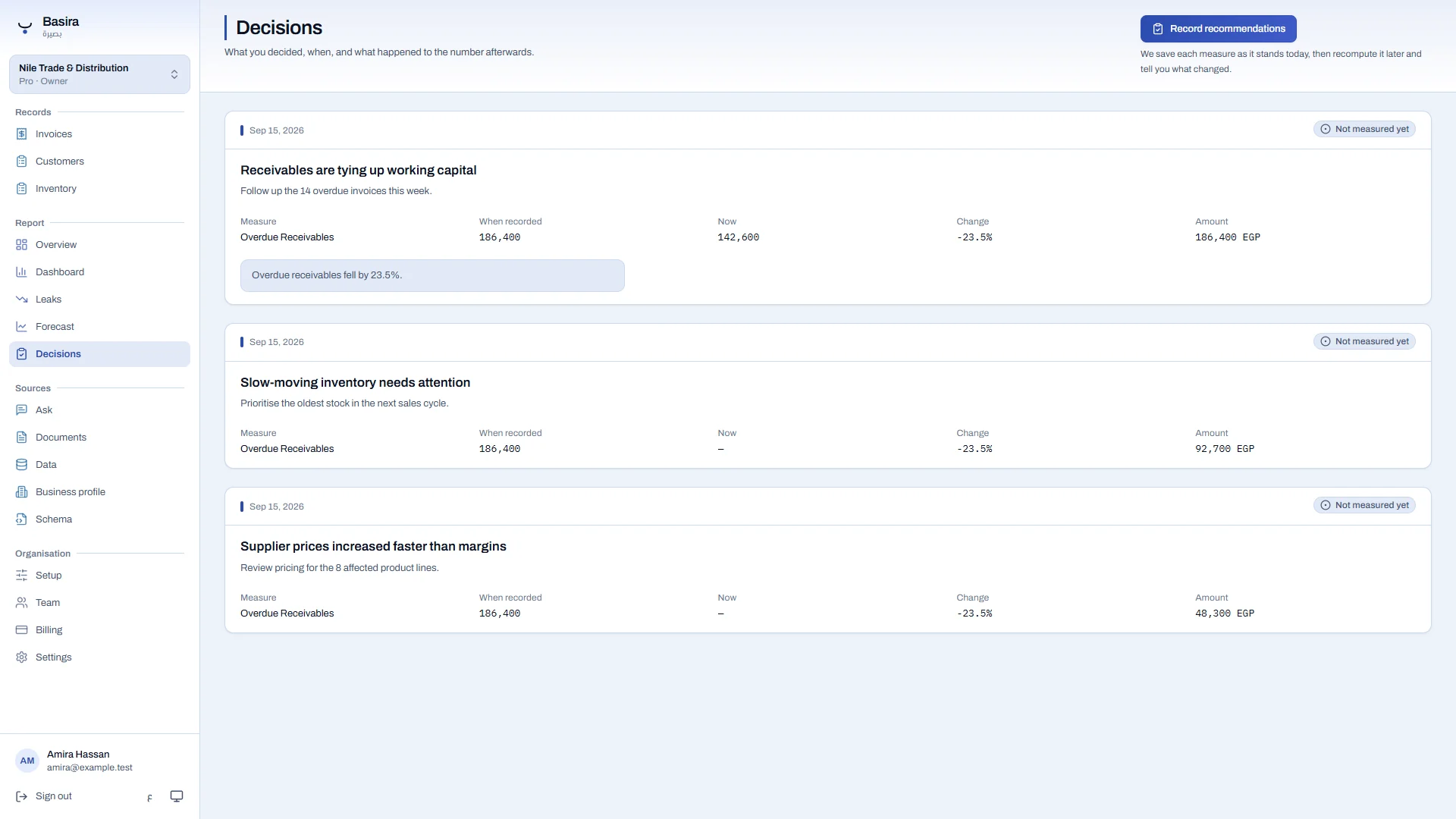
Forecasts expose back-tests and uncertainty; the decision log recomputes the target measure against the recorded baseline.
The trade-offA change after advice does not prove the advice caused it. Follow-up needs enough history and an honest account of what was measured.
A closer look.
Views from the product.
Current limits.
Analysis currently reads imported data in DuckDB. Records entered in the operational PostgreSQL screens are stored separately and are not yet synchronized into analysis.
What I’d improve next.
Synchronize operational records into the analysis warehouse, with source tracking and reconciliation checks before those records affect findings.