Evidence-grounded AI
MedLens
The guideline answer, with the page it came from—and the disagreement it should not hide.
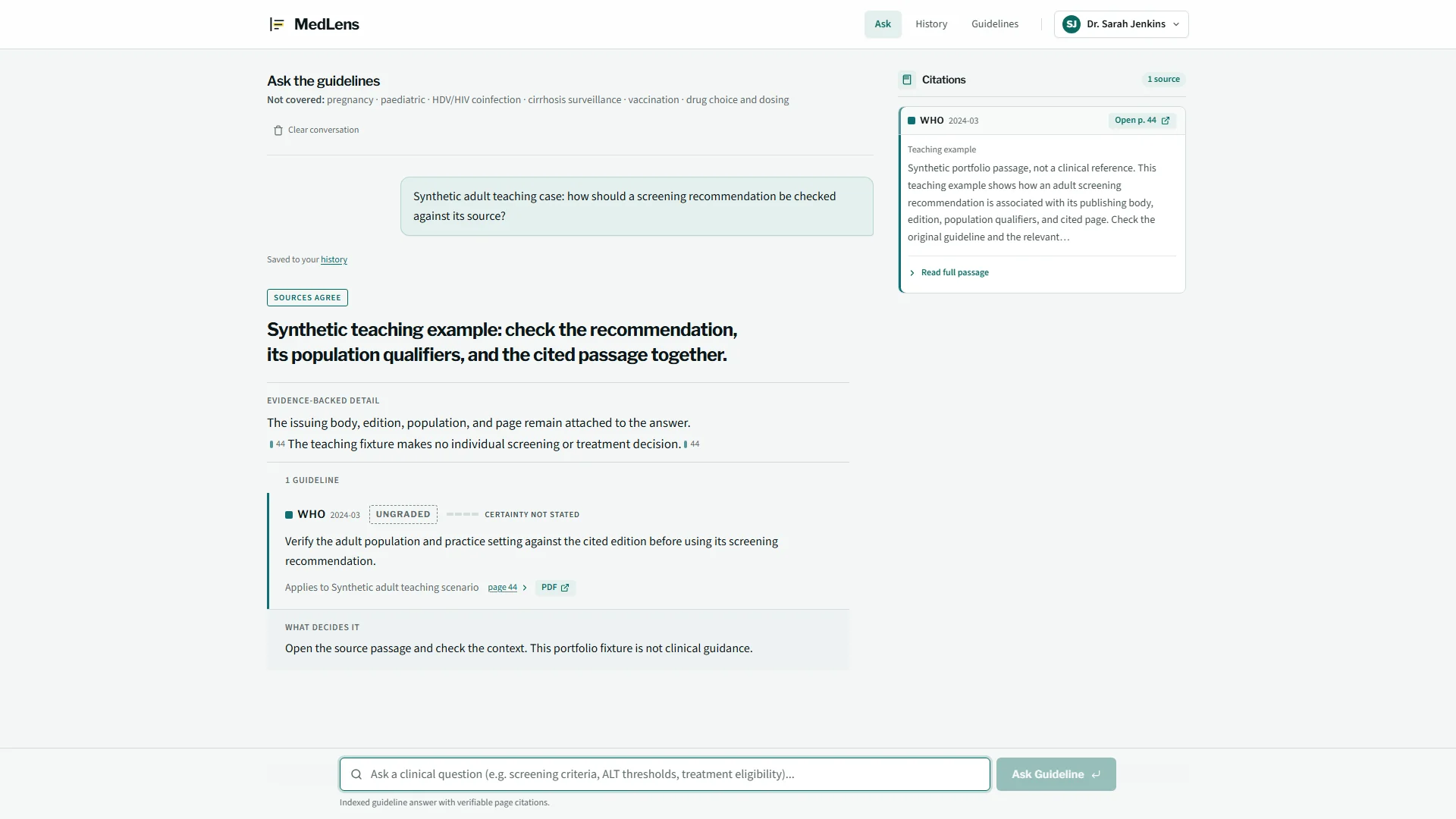
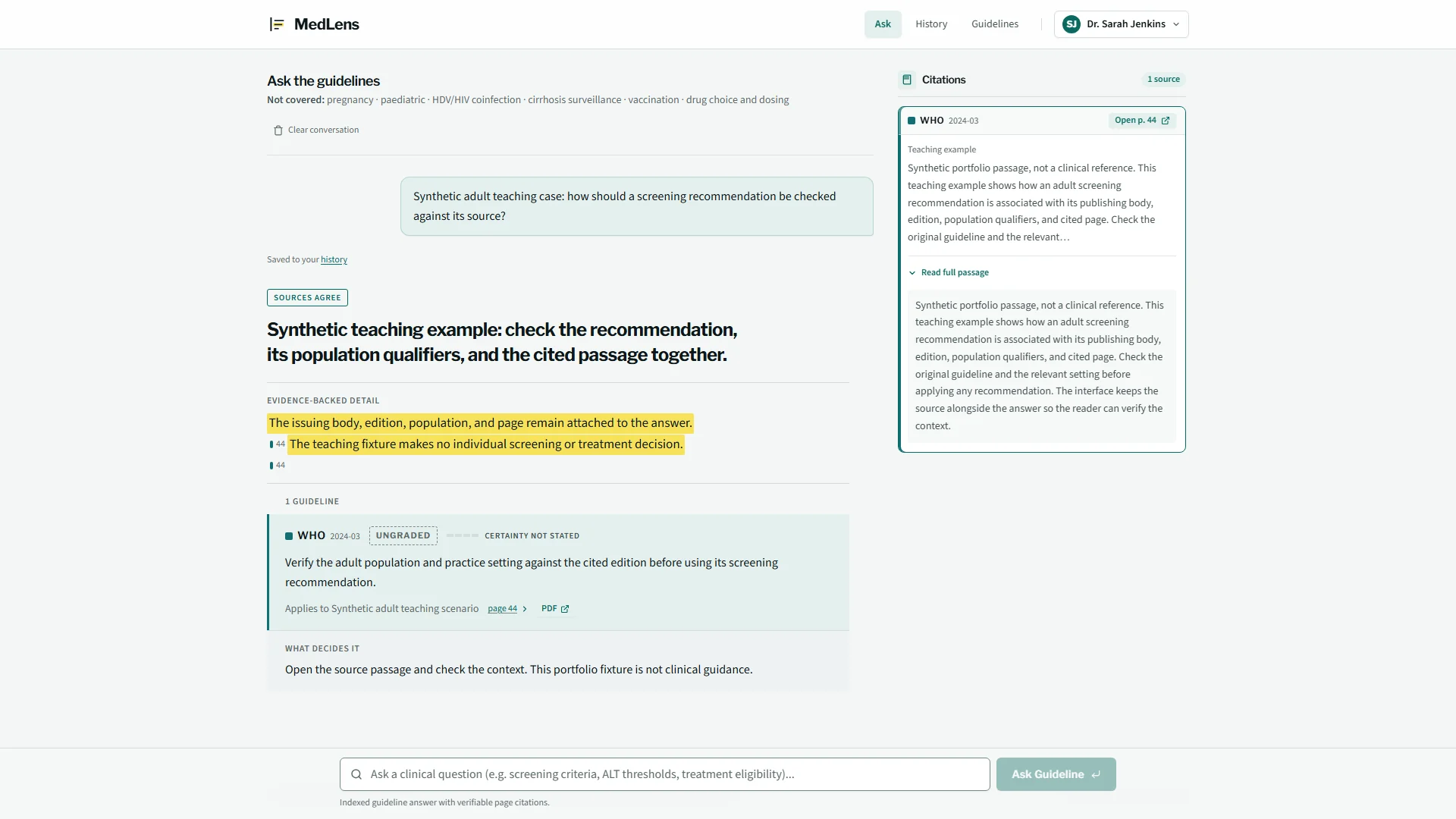
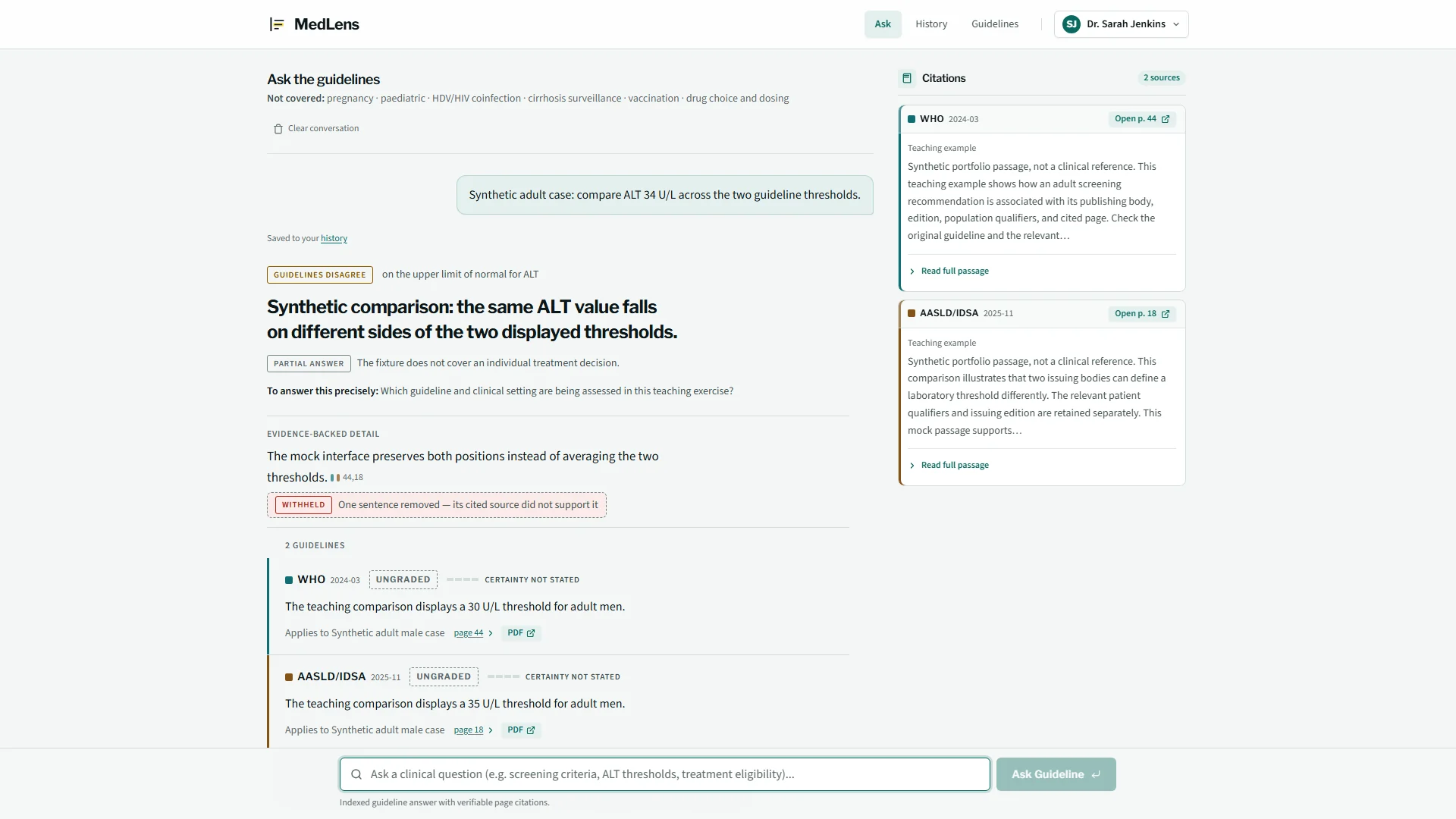
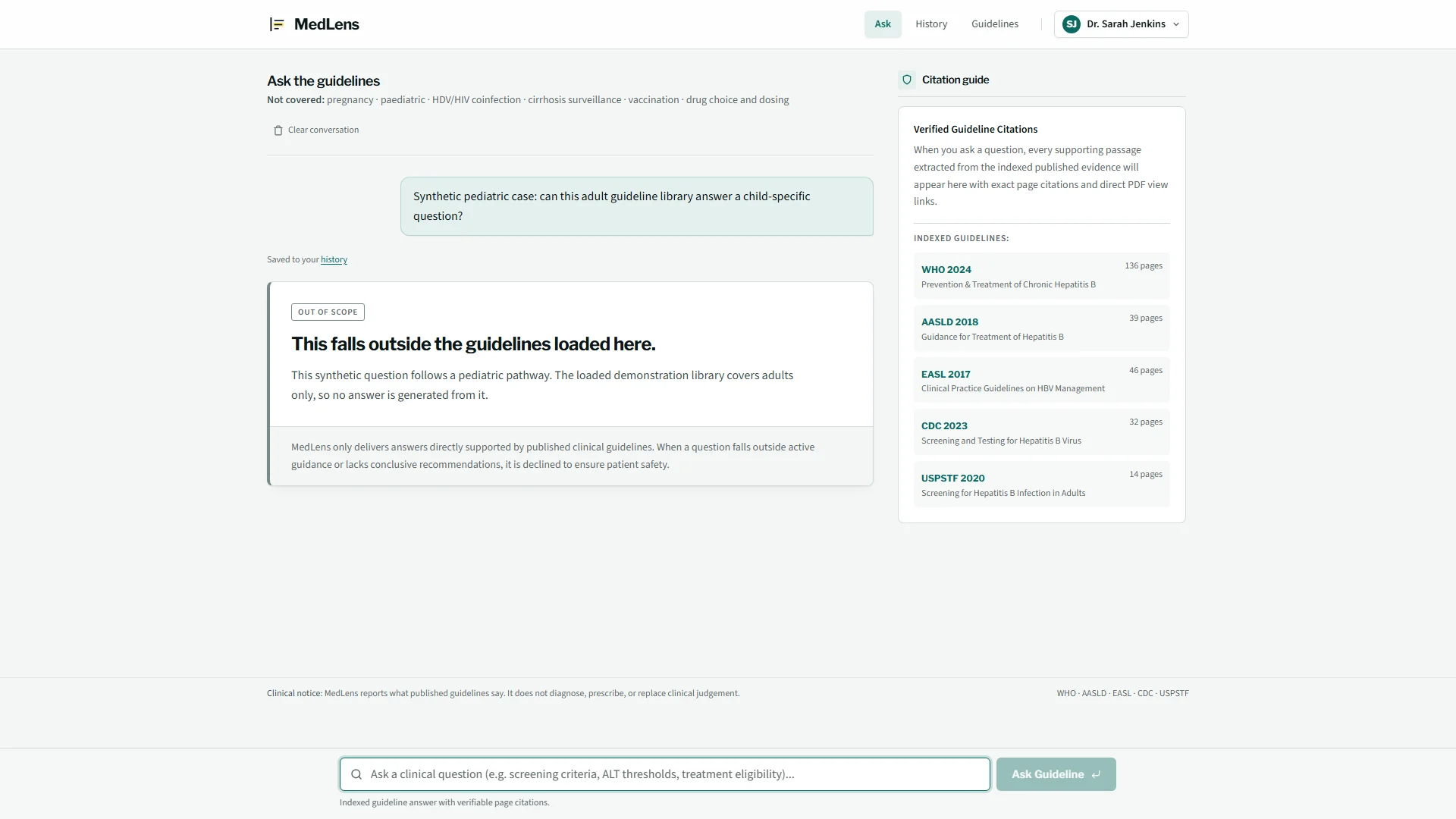
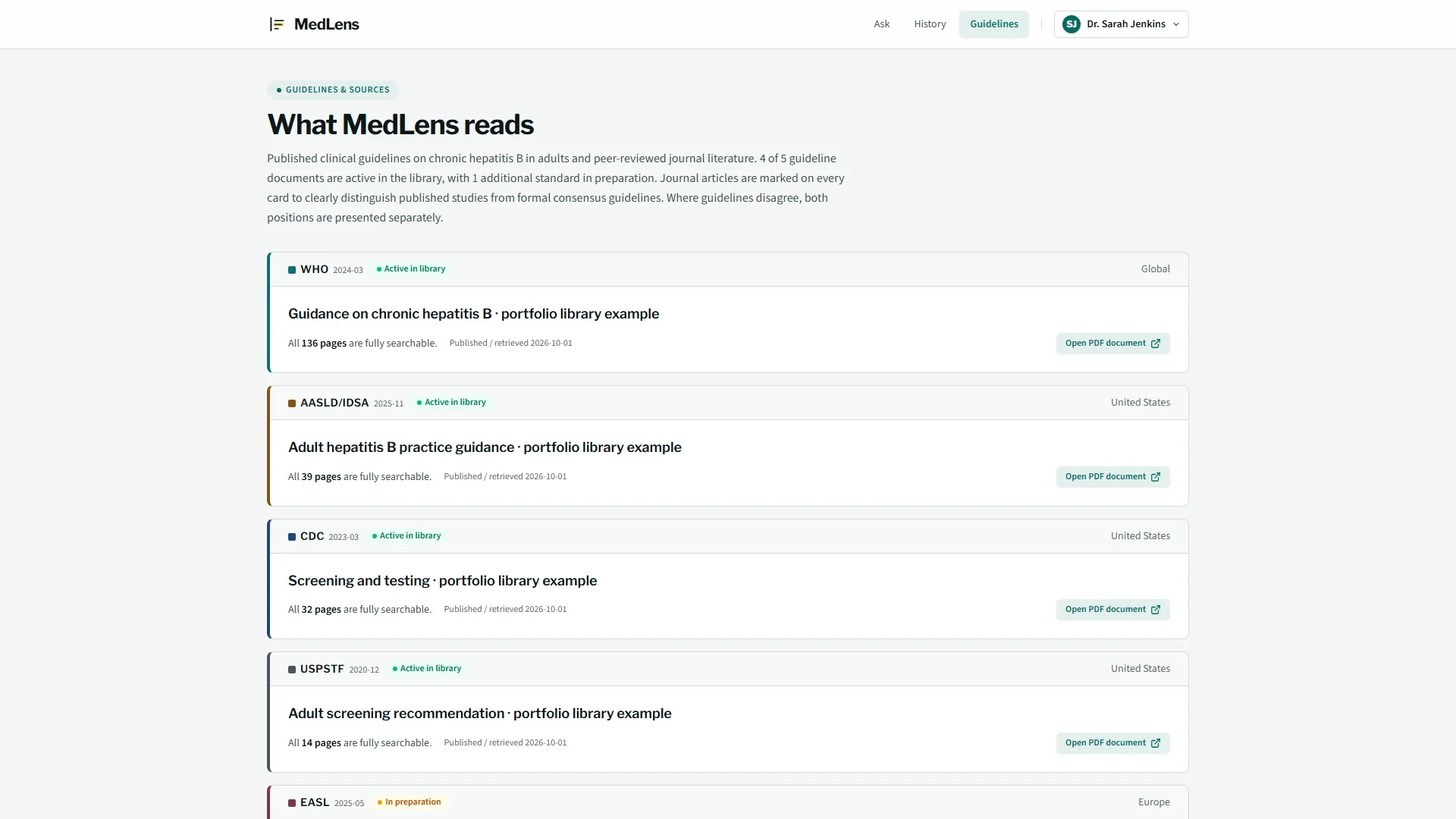
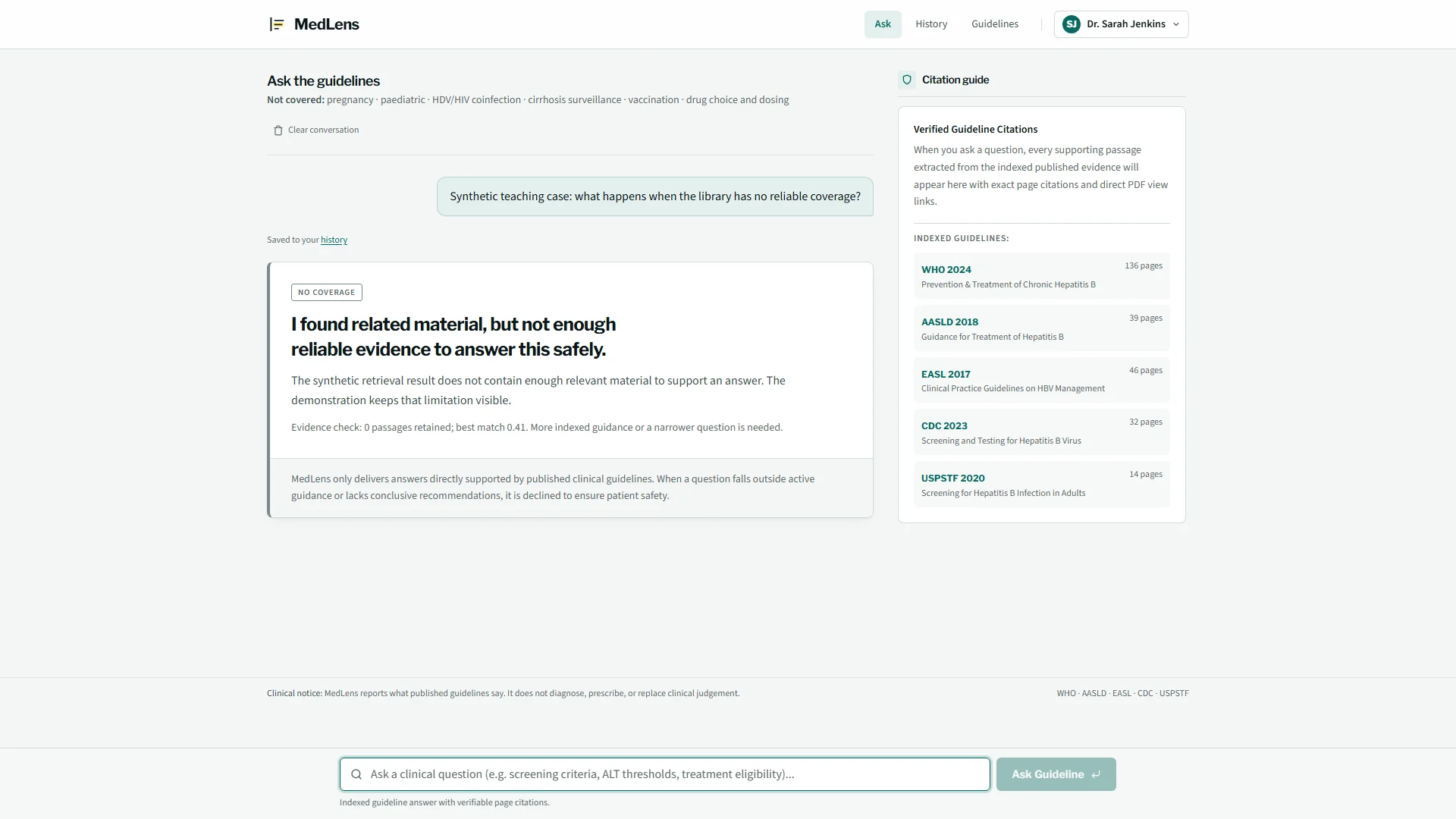
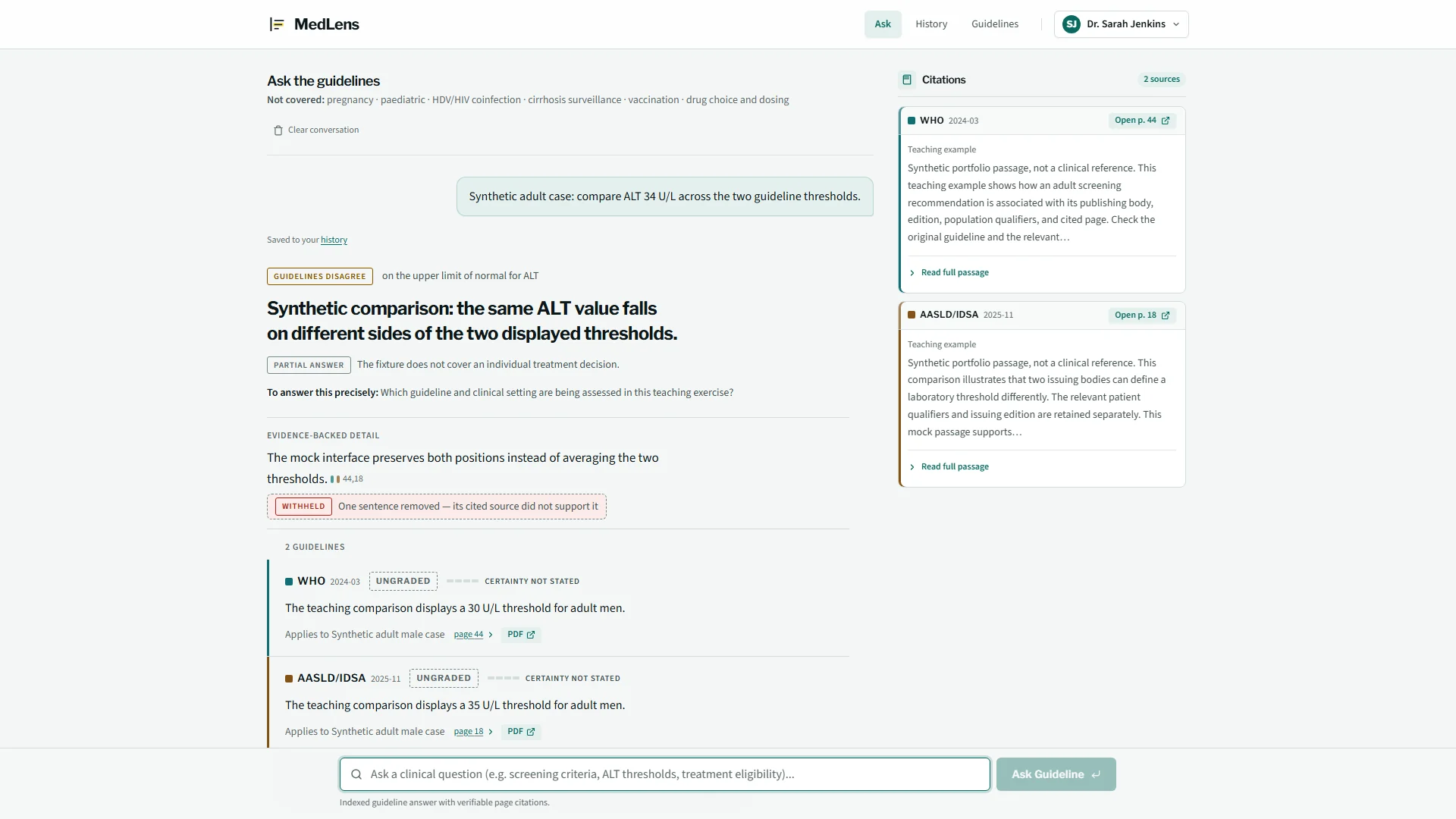
Screenshots from the project interface using synthetic teaching cases and source passages. They illustrate product behavior, not validated clinical guidance.
What this enables.
Makes the evidence behind an answer visible, including where sources disagree and where the system cannot answer.
The problem.
An answer about published clinical guidance needs visible evidence and clear scope. When guidelines disagree, blending their positions can erase the distinction a reader needs to inspect.
Inside the system.
Follow the request, one step at a time.
Question triage
question → scoped request or refusalCheck whether the question belongs to adult chronic hepatitis B and the loaded guideline scope.
An illustrated request flow, based on the project architecture. Select any step to inspect it.
The decisions.
Put evidence beside the answer
Each accepted sentence is linked to its document, section and page. The citation rail opens the passage the reader needs to check.
The trade-offSentence-level verification adds model calls and latency. Entailment checks support traceability, but do not establish clinical correctness.
Keep disagreements visible
Conflict detection runs alongside sentence verification. The interface displays guideline positions separately, preserving their source and context.
The trade-offA more detailed answer asks the reader to compare applicability instead of offering a single simplified recommendation.
Refuse when the system cannot support an answer
Scope and evidence gates can stop a question before synthesis. Corpus fingerprints bind indexing and evaluation to the same source revision.
The trade-offConservative gates limit coverage. Their thresholds need recalibration when the corpus changes; the benchmark harness still needs an executed evaluation.
A closer look.
Views from the product.
Current limits.
The authored benchmark has not been run, so no benchmark accuracy is claimed. MedLens retrieves published guidelines; it does not diagnose or prescribe. Portfolio captures use synthetic teaching cases.
What I’d improve next.
Run the authored benchmark against the frozen corpus and publish measured retrieval, citation and refusal results before making accuracy claims.