Security engineering
SecureScout
A repository becomes a readable security report, through a distributed scanning pipeline.
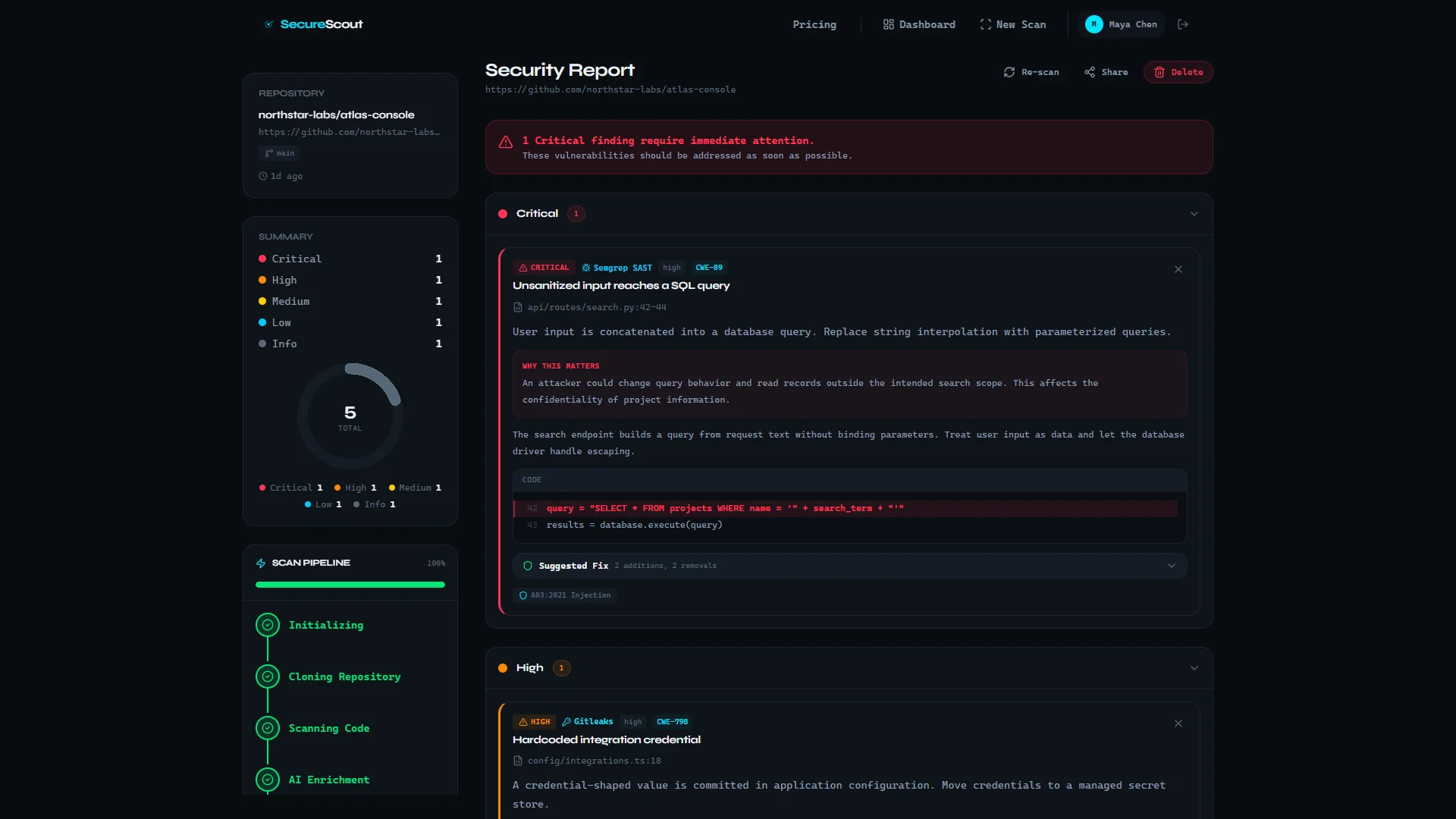
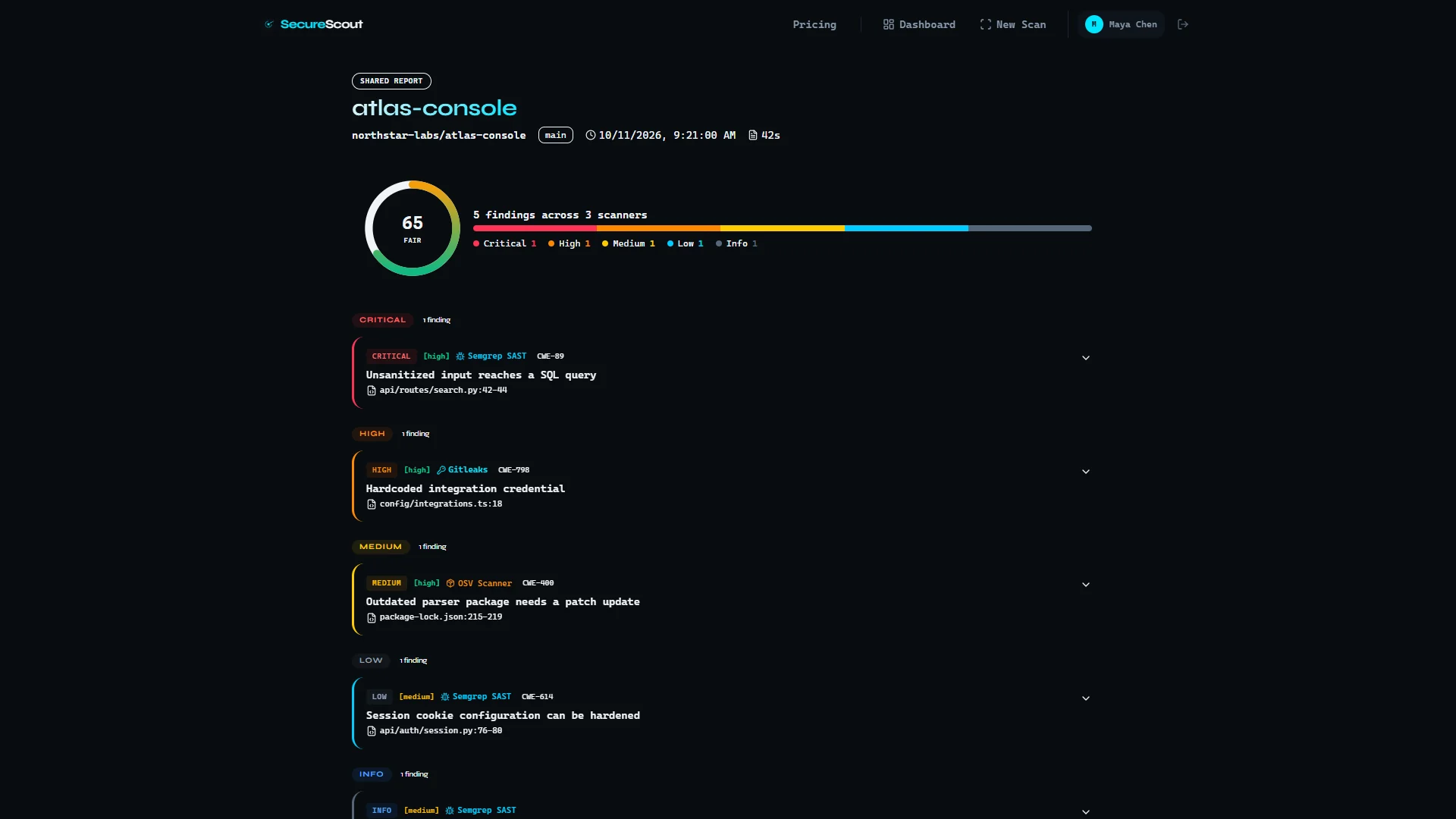
Screenshots from the project interface. Populated product views use synthetic demo data; displayed figures are not measured customer outcomes.
The problem.
Security tools produce different formats and levels of detail. A useful audit needs to bring those findings together and explain what a developer can do about them.
Inside the system.
Follow the request, one step at a time.
Next.js interface
repository URL → audit requestA user submits a repository URL for a security audit.
An illustrated request flow, based on the project architecture. Select any step to inspect it.
The decisions.
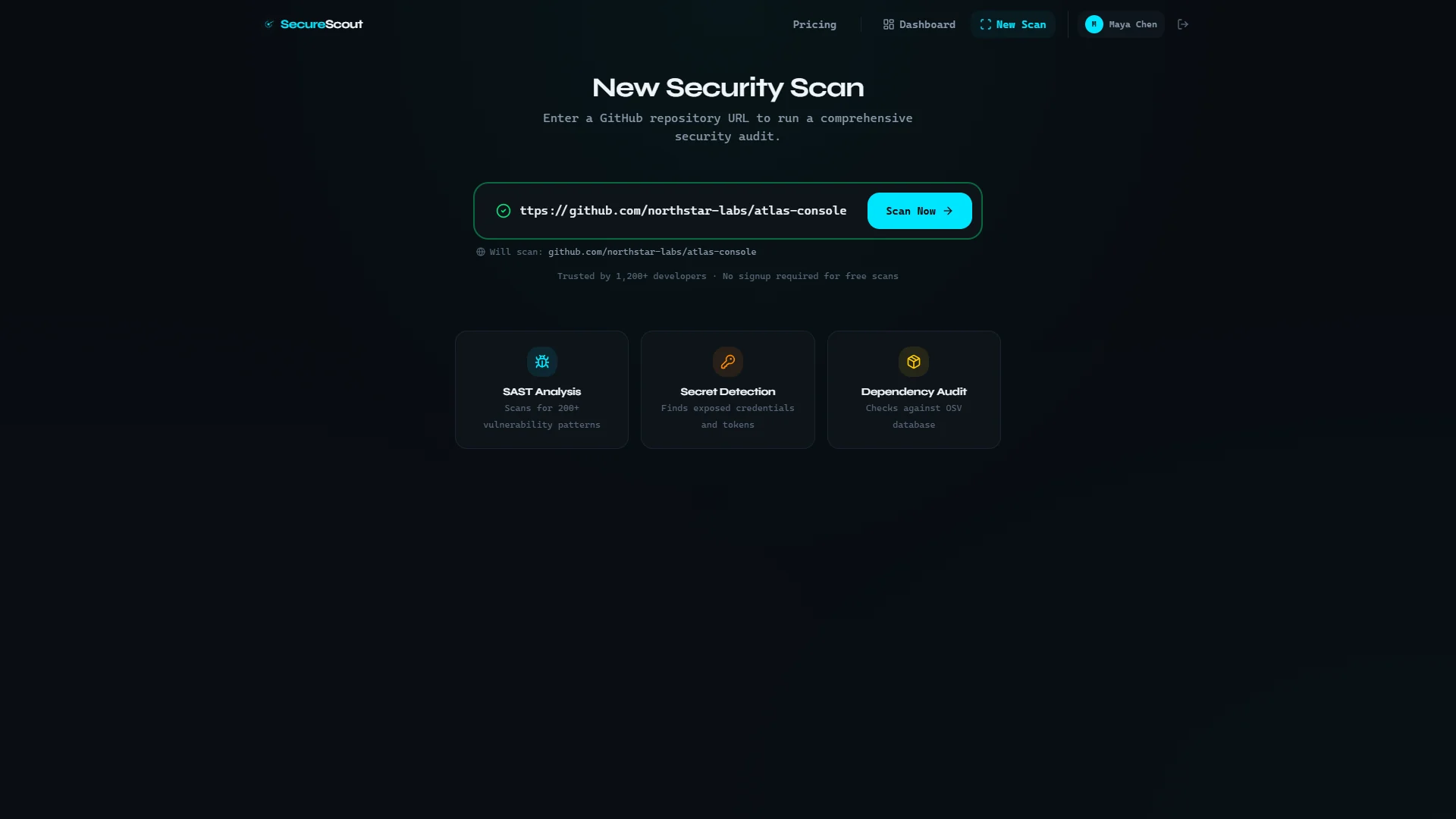
Treat repository URLs as untrusted input
URL validation includes SSRF protection. Repository processing uses subprocess resource limits; this is not equivalent to a container isolation boundary.
The trade-offValidation and limits constrain exposure, but do not replace reviewing isolation boundaries and testing malicious inputs.
Run scanning outside the HTTP request
Celery workers execute the scanning pipeline over Redis so an audit does not depend on one long-running web request.
The trade-offThe interface tracks asynchronous work, while worker failures and job status become explicit application concerns.
Normalize before explaining
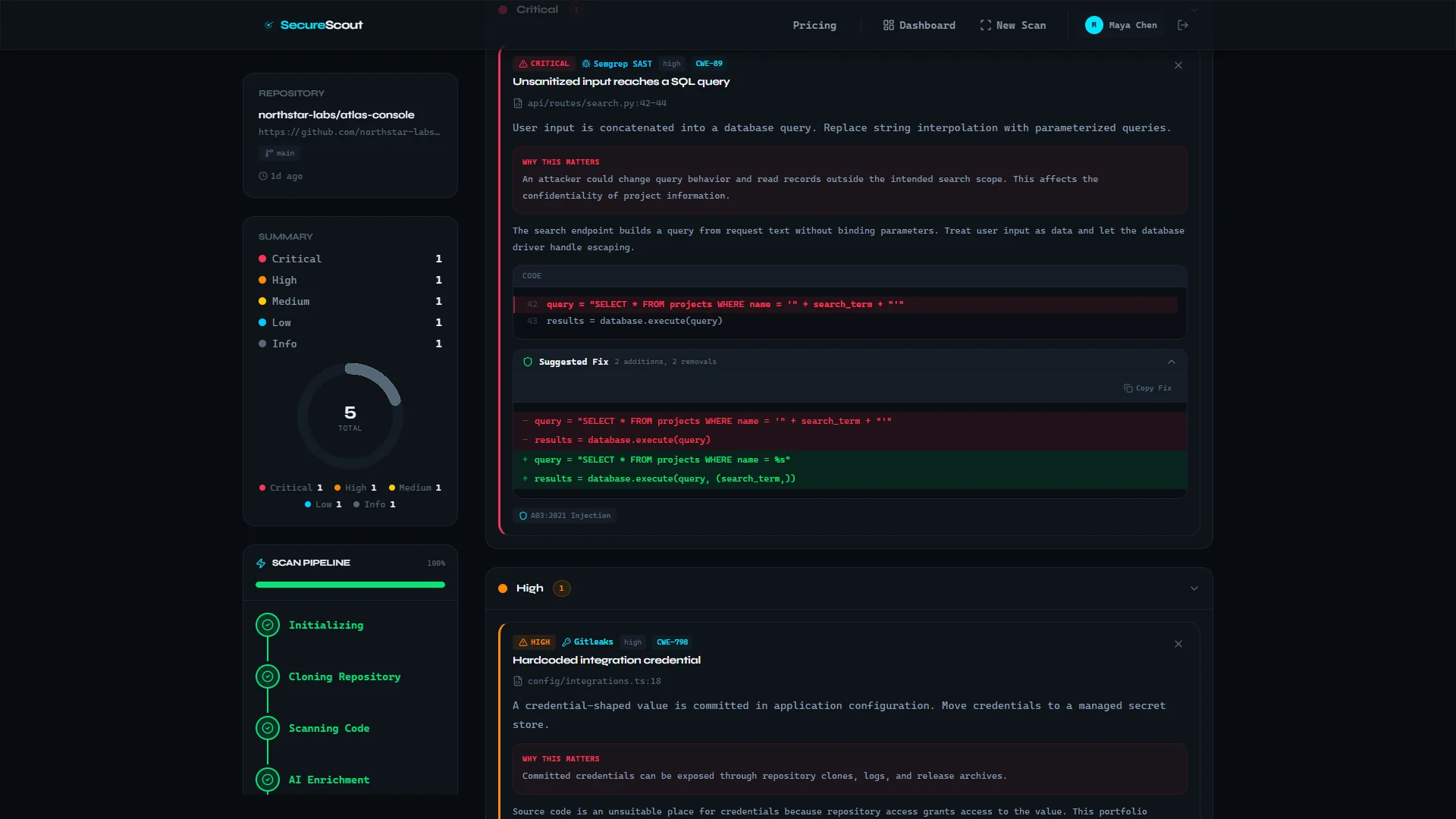
Scanner findings become a shared, severity-ranked report with explanations, code fixes, and PDF export.
The trade-offA shared format is easier to read; scanner provenance needs to remain available to inspect the original basis of a finding.
A closer look.
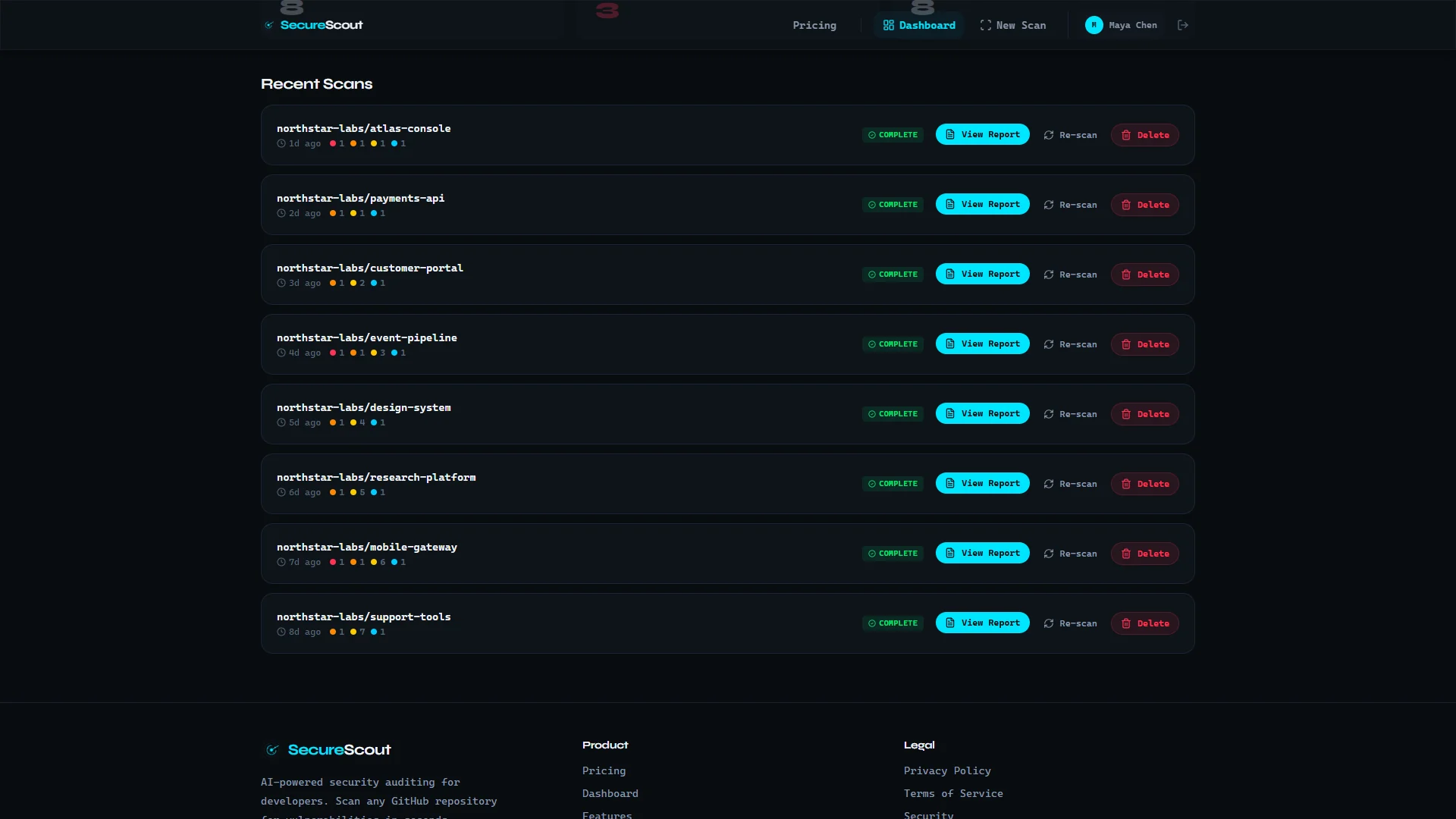
Views from the product.
What I’d improve next.
Add reproducible fixtures for malicious URLs and repository resource exhaustion, then evaluate explanations against the original scanner findings.