Real-time collaboration
Gridly
One shared board. Four ways to work. Updates that reach the whole team.
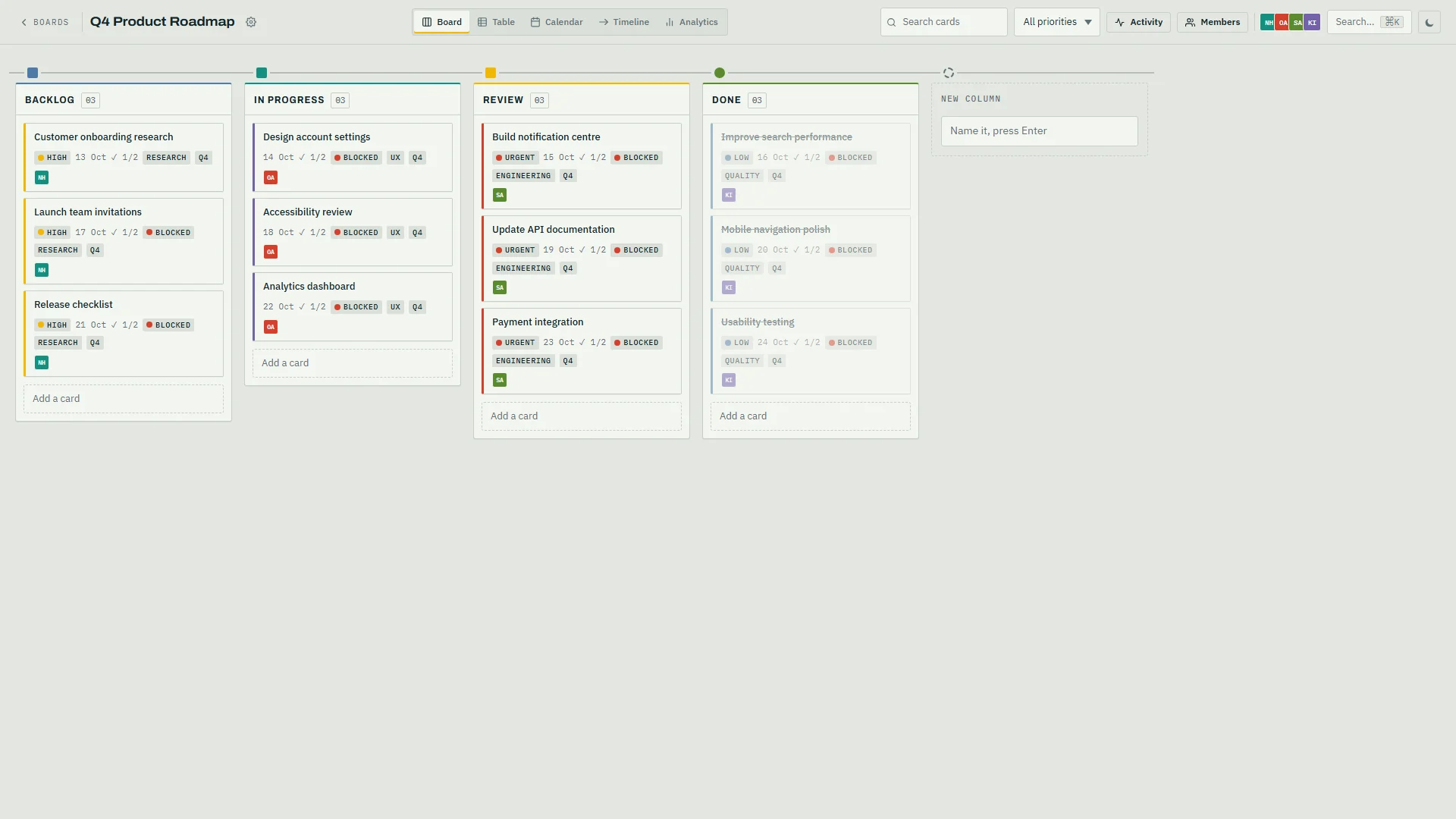
Screenshots from the project interface. Populated product views use synthetic demo data; displayed figures are not measured customer outcomes.
The problem.
A team should not maintain separate task lists for planning, scheduling and reporting. Different ways of viewing work need to reflect the same cards, permissions and changes.
Inside the system.
Follow the request, one step at a time.
Board interface
task → updateA team member changes a task in one of the board's views.
An illustrated request flow, based on the project architecture. Select any step to inspect it.
The decisions.
Keep views over one shared model
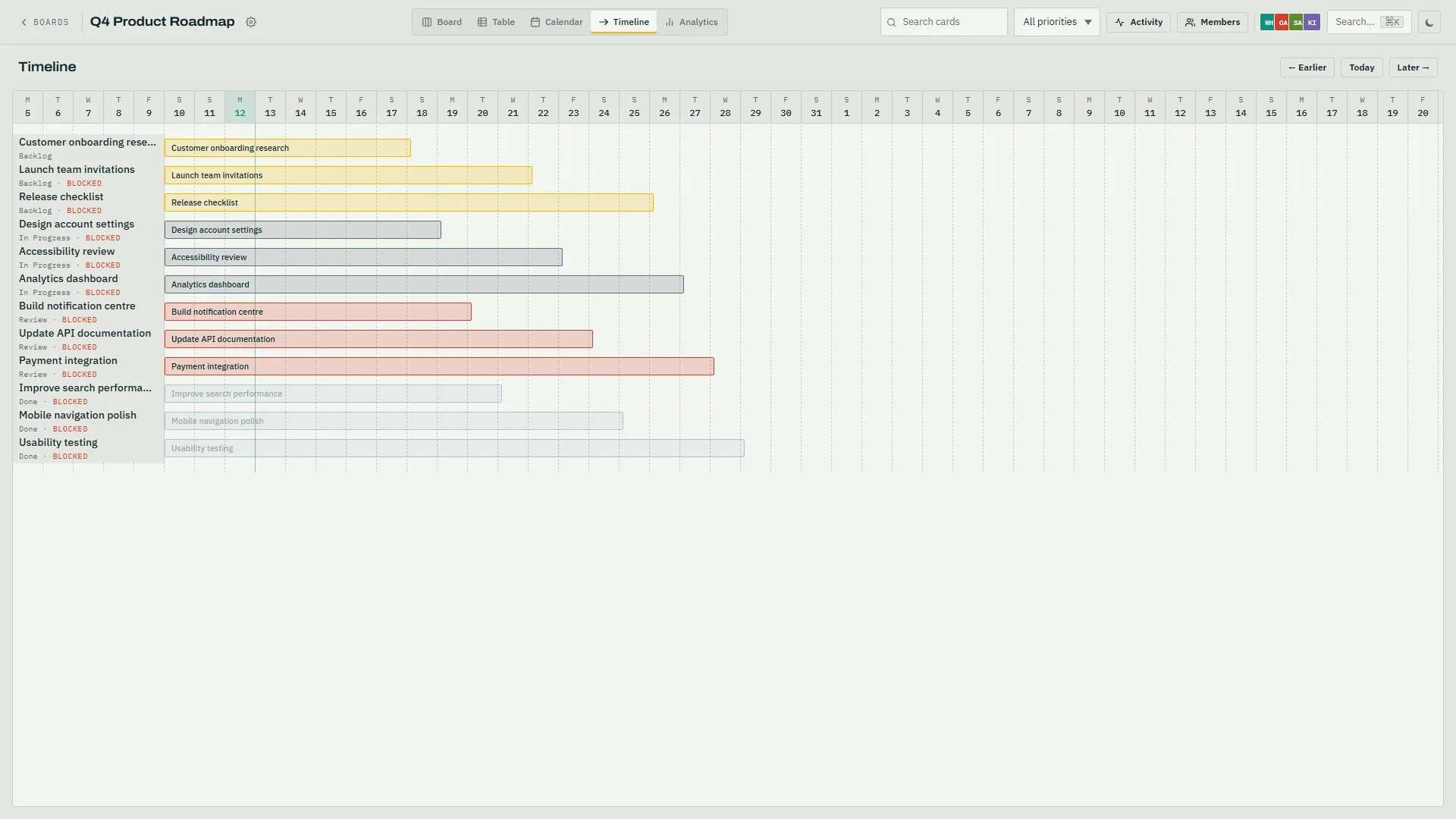
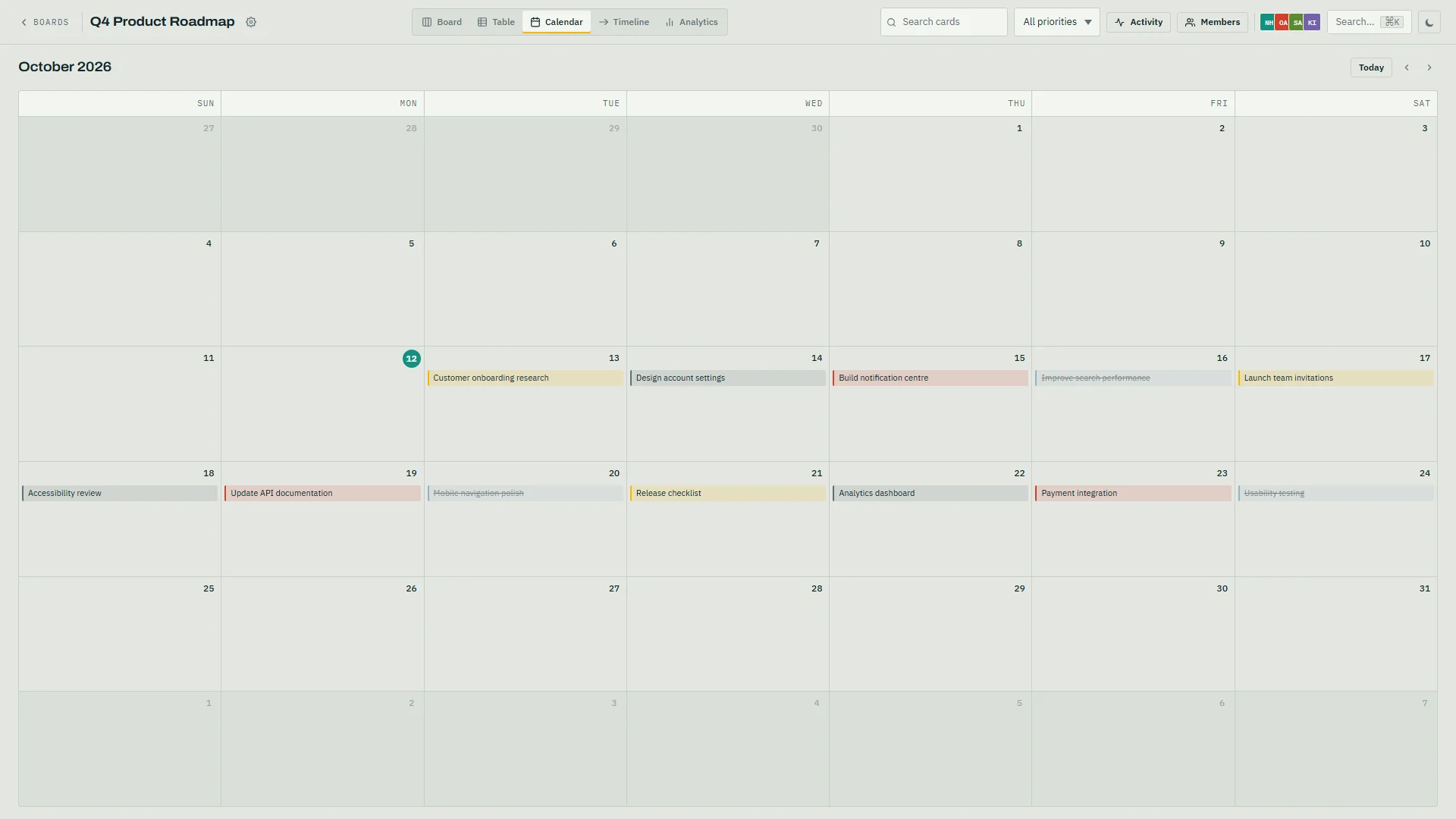
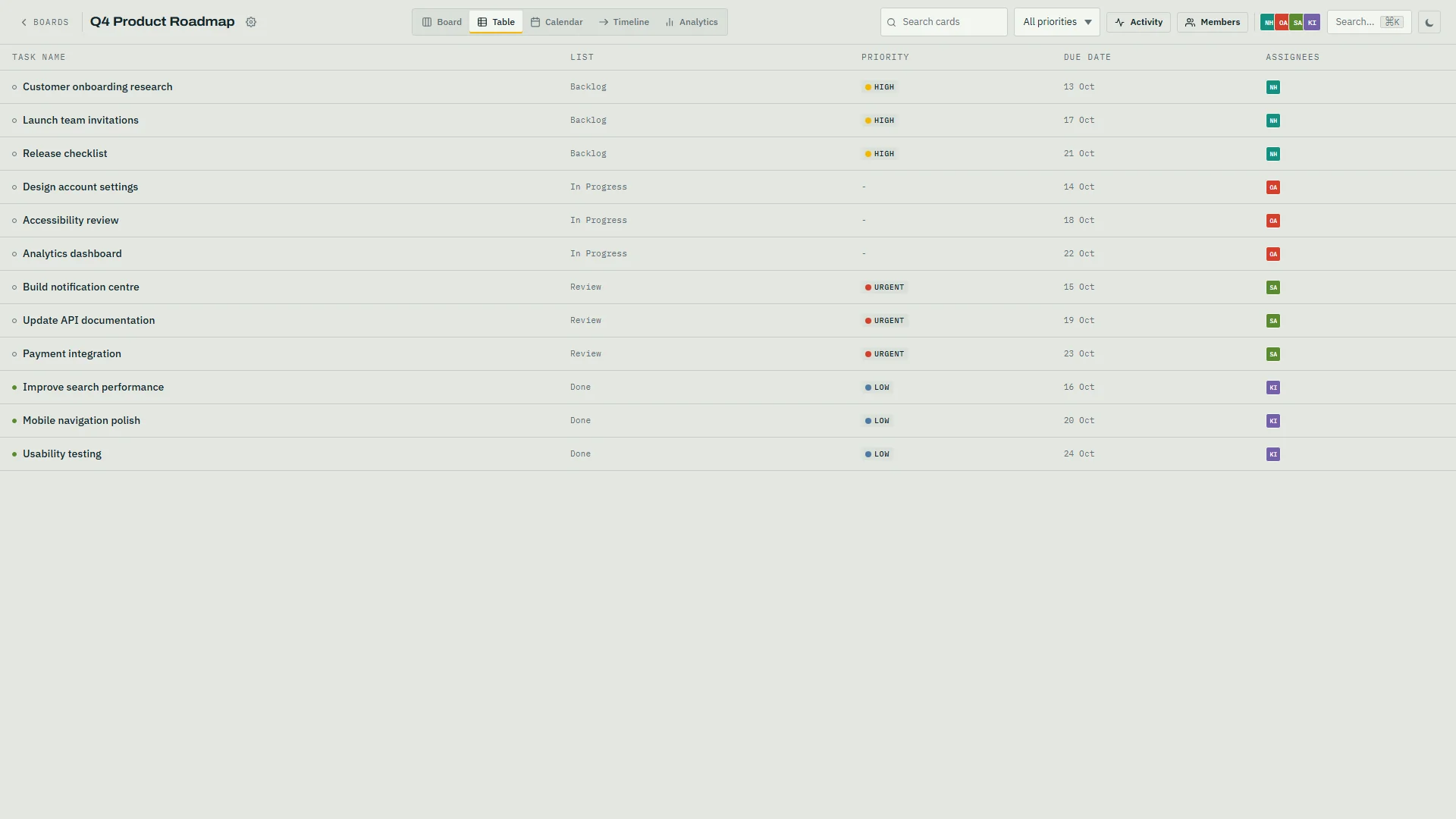
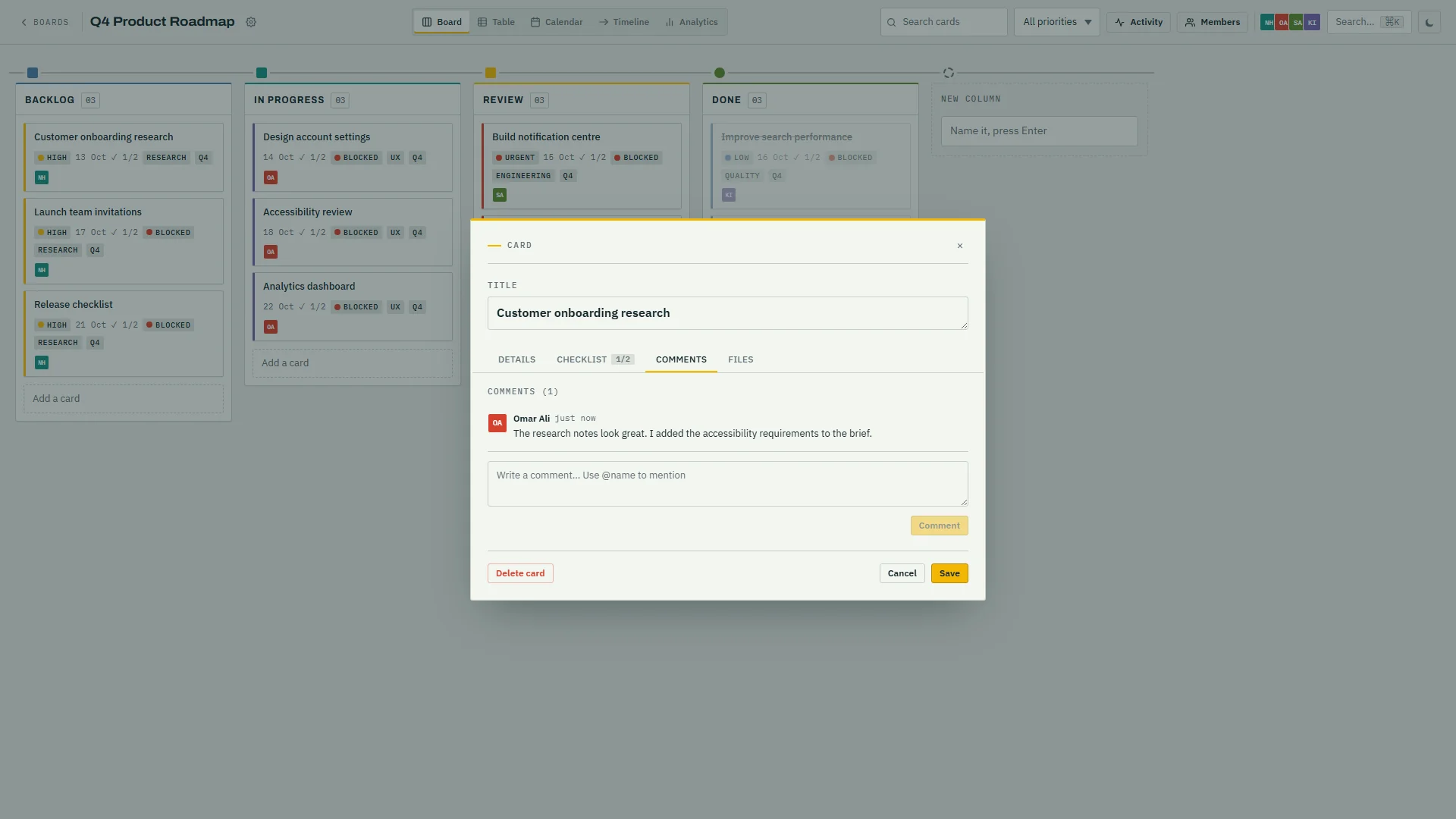
Kanban, table, calendar, and timeline represent the same board data.
The trade-offConsistent data reduces duplication, while each view still needs to express dependencies and custom fields appropriately.
Provide a fallback for live updates
Socket.IO handles live synchronization, with polling when WebSockets are unavailable.
The trade-offPolling retains connectivity at the cost of less immediate updates and more repeated requests.
A closer look.
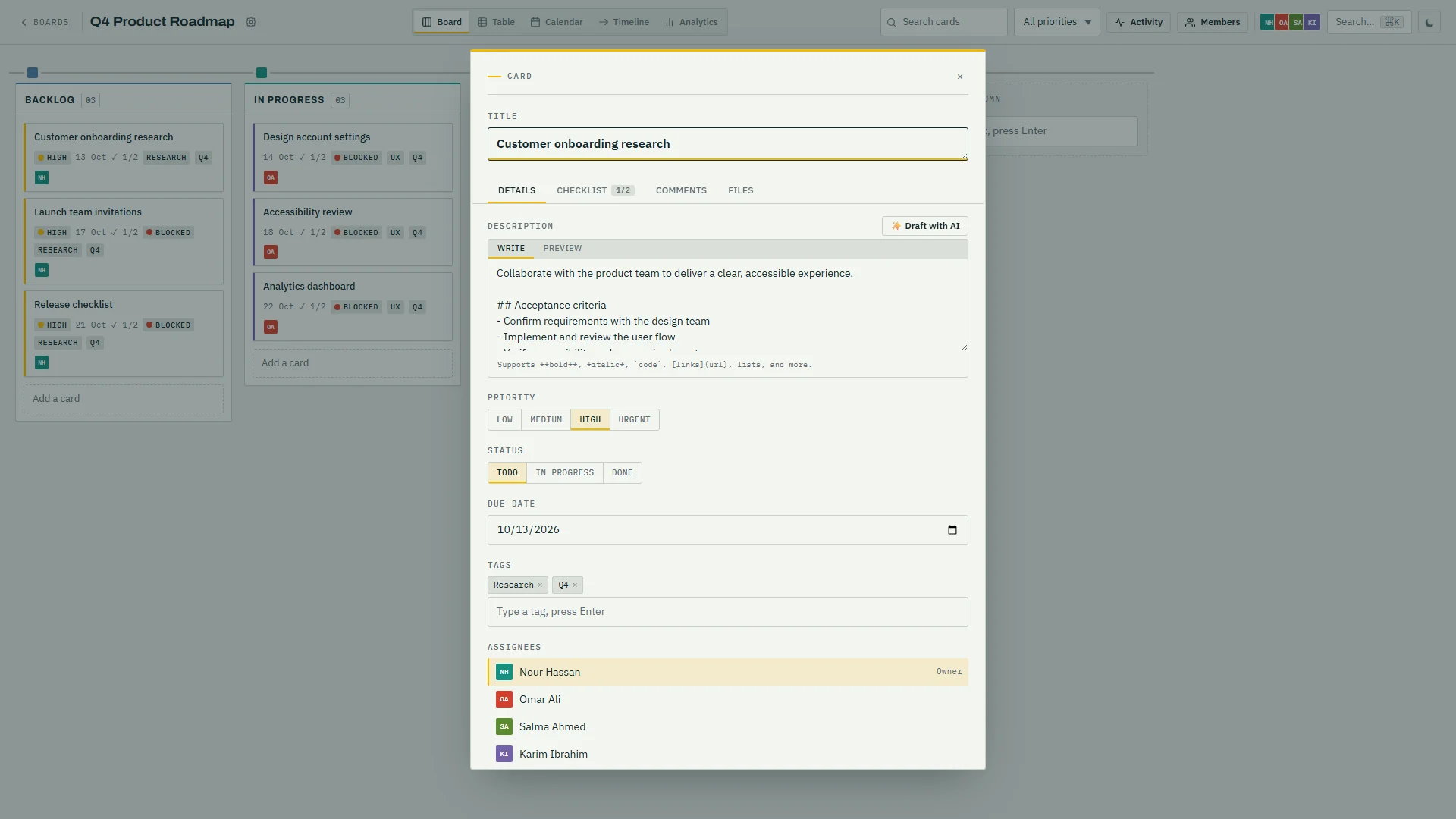
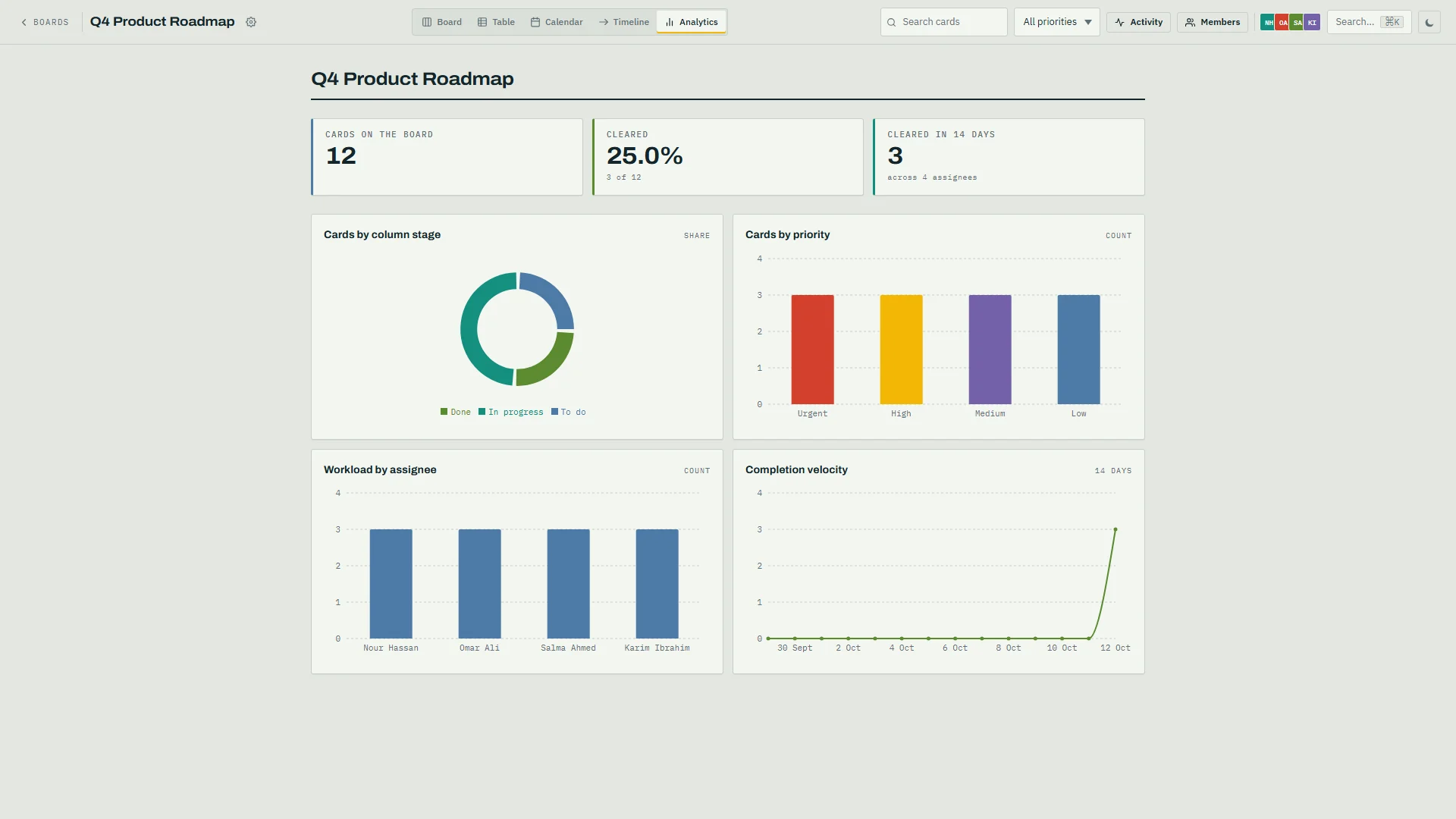
Views from the product.
What I’d improve next.
Exercise concurrent edits and degraded connectivity with repeatable multi-user scenarios, including permission changes during a session.